Heldio
Framing the Real-World Language Performance Gap
Ongoing product design work for a language learning startup. Shaping the product experience from early concepts to scalable UX flows, with a strong focus on learning behavior and retention.
Overview
Introduction
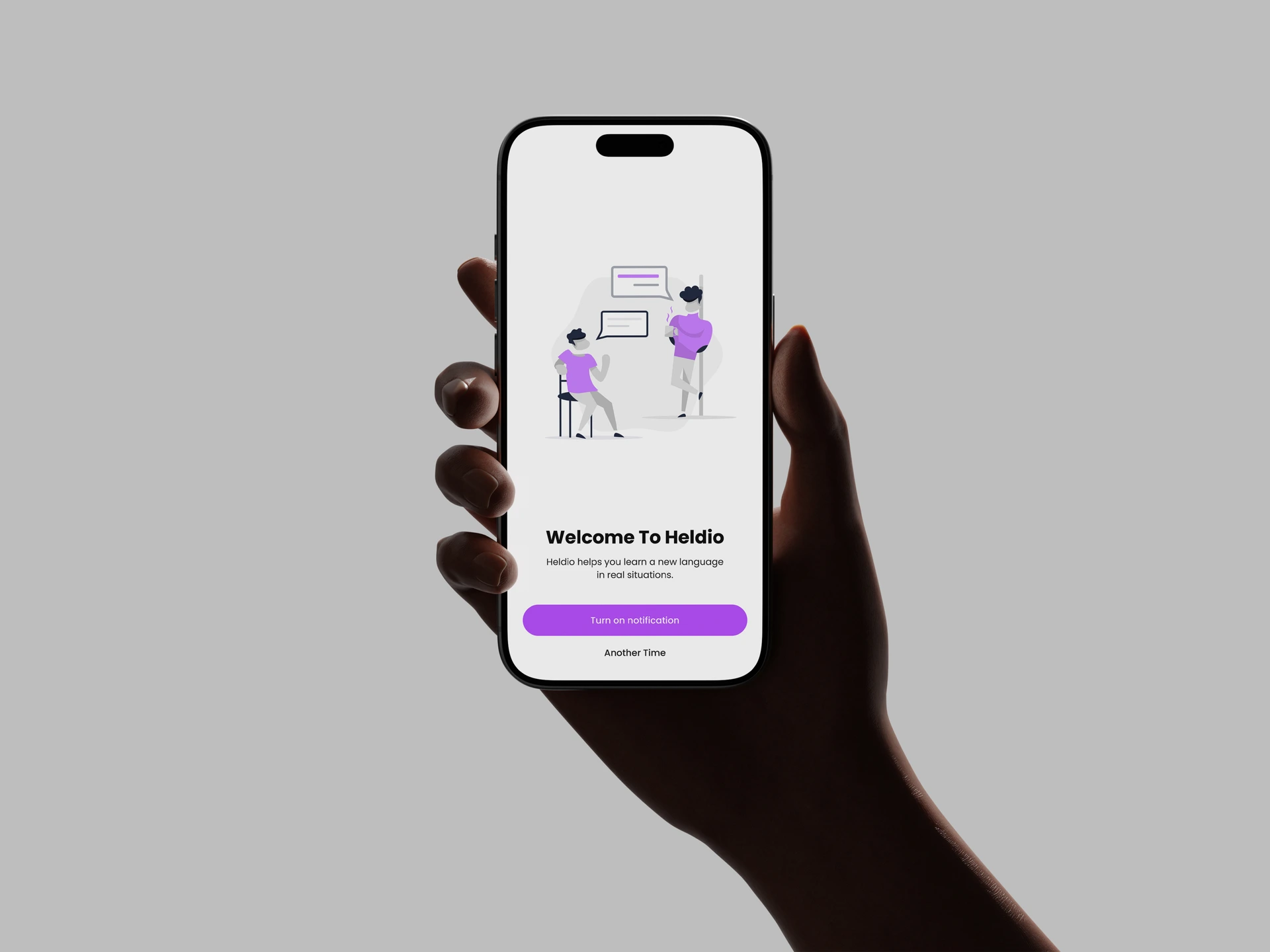
A product research initiative to understand how people learn and use German in real-life situations, and how designing situation-based learning experiences can improve confidence, practical readiness, and long-term engagement.
Methods
- User interviews
- Quantitative surveys
- Competitive analysis
- Language learning model research
- Expert consultation (German instructors)
- Personas & behavioral patterns
- Opportunity mapping for ideation
- Problem framing workshops
Summary
Everything started with our assumptions...
Before building anything, we asked a simple question: why do people who study German still struggle to use it in real life?

Learning doesn’t transfer easily to real life
People study grammar and vocabulary, but applying them in everyday situations is much harder.
Understanding doesn’t automatically lead to speaking
Many learners understand the language well, but using it confidently in real conversations feels difficult.
Motivation depends on real-life relevance
When lessons feel disconnected from daily needs, learners quickly lose interest and struggle to stay engaged.
Real-life practice opportunities are often limited
Many learners lack safe and structured environments where they can practice everyday situations consistently.
Listening to real learner voices across digital platforms
To validate our assumptions, we explored online spaces where learners openly share their struggles, questions, and real learning experiences.

Mariam Rahimi
“Whenever I’m about to face a real situation in German, I feel like I have to rehearse it with ChatGPT first. Otherwise, I just can’t respond naturally on the spot.”
What we discovered from early research
From patterns to real voices
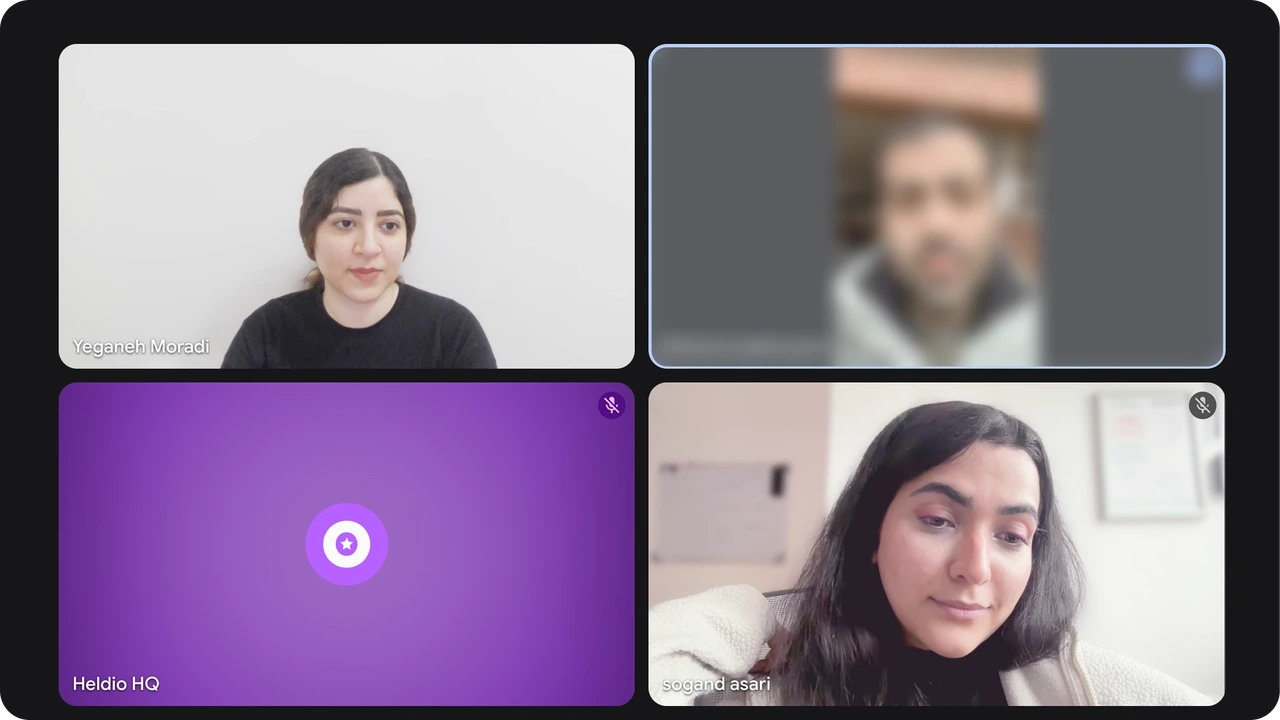

“I usually prepare what I want to say in advance, but when unexpected questions come up, I struggle to express myself.”

“When I talk to Germans, some of them speak very fast, and I get confused right away.”

“I need someone to point out my mistakes during conversations and keep a record of them so I can review them later.”
Knowing German isn't the problem, using it in real life is
Survey findings reveal a gap between structured learning and real-life communication. Learners feel prepared in theory but unprepared in practice, especially in spontaneous conversations and socially dynamic environments.
The Knowledge-Performance Gap
A vast majority of learners report they can recall vocabulary and grammar in exercises, but feel paralyzed when trying to use them in real-time conversations.

Performance Under Pressure
Real-time communication pressure remains the primary barrier. Respondents cited finding words quickly and spontaneous speech as their top two stressors.
The Simulation Deficit
Most learners feel that current tools excel at teaching rules but lack realistic conversation simulation and feedback on natural communication patterns.
Behavioral Insight
Utility-First Motivation Engagement is strictly driven by real-life needs: workplace communication, daily bureaucratic tasks, and social integration into German society.

So what’s the real problem?
Understanding Who We Design For

Sepehr
Age 25 | Lives in Iran | German level A2–B1
His Story:
Sepehr is preparing to move to Germany and is actively studying the language for exams and integration. While he performs well in structured learning environments, he has had little exposure to real conversational German or everyday social interactions.

Sara
Age 33 | Lives in Germany | German level B2–C1
Her Story:
Sara already lives in Germany and uses German regularly. She understands most conversations and can communicate functionally, but struggles with spontaneous expression, fast speech, and social nuance. She often prepares what she wants to say in advance and feels stressed in unpredictable conversations.
What Existing Language Tools Do Well And What They Miss
Where competitors fall short
- Limited real-life conversation simulation
- Weak focus on communication performance
- Minimal exposure to natural speech and social nuance
- Lack of safe environments for spontaneous speaking



Where competitors perform well
- Strong structured learning systems
- High engagement through gamification
- Rich content libraries
- Accessible and scalable learning



From Insights to Design Opportunities
Based on patterns observed across interviews, surveys, and behavioral research, we reframed user challenges into actionable design opportunities.
How might we ...
help learners respond confidently and spontaneously in real-life German interactions (e.g., work, bureaucracy, healthcare, social situations)?
How might we ...
help learners activate the grammar and vocabulary they already know so they can use it naturally in real conversations?

How might we ...
make it easier for learners to understand natural German — including fast speech, accents, and informal language?

How might we ...
prepare pre-migration learners for the real language and social situations they will face in Germany?
Interested in working together?
Whether you're building a product, improving an existing experience, or looking for thoughtful UX feedback I'd love to collaborate.

Explore more work
Too Good To Go — Improving Retention Through Personalization
Peria — Smart wellbeing app for women
Mooday — Designing Adaptive Daily Planning Based on Energy & Mood
ChatGPT — Designing a Structured AI Workspace Experience